Residential shelter planning · Clarksville, TN
Clarksville tornado risk and home shelter planning
An EF-3 tornado crossed Clarksville on a Saturday afternoon in December 2023. This page covers what the National Weather Service recorded, how FEMA suggests weighing a home safe room, and the local contacts to use before you build.
Get a Clarksville storm shelter quoteWhat happened on December 9, 2023
The National Weather Service in Nashville rated the Clarksville tornado EF-3, with estimated peak winds of 150 mph. Its track, extended after a joint survey with NWS Louisville, ran 47.75 miles into Kentucky, and it was on the ground from 1:41 to 2:49 p.m. The NWS summary lists four deaths and 62 injuries.
A house built to code is not a shelter
FEMA P-320 warns that meeting minimum building code does not mean a home can withstand the pressures and flying debris of a strong tornado, even with extra wind-resistant features. Safe rooms built to FEMA P-361 criteria are designed to give occupants a high probability of avoiding injury or death.
How FEMA frames the decision
FEMA P-320 includes a tornado zone map and a risk table. In zones III and IV, FEMA calls a safe room the preferred protection from extreme winds; in zone II, it says one should be considered. If you are near a zone line, FEMA says to use the higher zone. Check the map in P-320 for your location.
Speed matters more than location type
FEMA advises placing a safe room so it can be reached quickly from all parts of the home and keeping it free of clutter. For a shelter outside, ICC 500 limits the trip to 150 feet from the nearest house door, and FEMA advises going early, before wind, hail and debris arrive.
The 2023 tornado in numbers
These figures come from the National Weather Service Nashville event page. Use them for context only. Shelter design is based on FEMA and ICC 500 criteria, not on any single storm.
How FEMA and ICC 500 standards work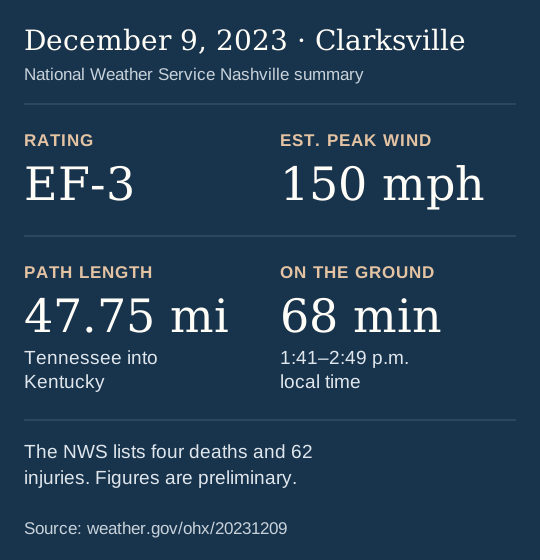
Plan the minutes between warning and shelter
FEMA advises placing a shelter so everyone can reach it quickly and keeping the way clear. Walk the route with your household, including anyone who needs help, and practice opening and latching the door.
Compare garage and yard placement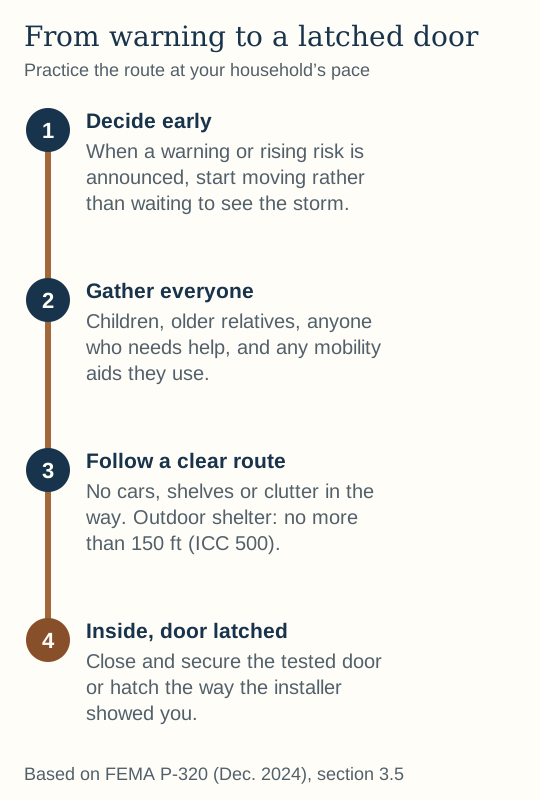
Local steps for Clarksville and Montgomery County homes
Confirm your permit office
City of Clarksville Building & Codes inside city limits; Montgomery County Building and Codes outside. Ask about permits and inspections for your address.
Check the flood map
Look up the address on FEMA’s Flood Map Service Center and ask the floodplain administrator about flash-flood risk before choosing below ground.
Ask about funding before you buy
Homeowners do not apply to FEMA directly. FEMA directs people to their state hazard mitigation officer to ask whether any safe-room program is open.
Consider the county shelter registry
After installation, Montgomery County EMA offers a storm shelter registry form asking for the shelter type, location, entry and capacity. Ask the EMA how the information is used.
Sources and further reading
Reviewed 2026-10-14
- National Weather Service Nashville: December 9, 2023 tornado outbreak
Rating, wind estimate, path, timing and casualty figures. Checked October 14, 2026.
- FEMA P-320, Taking Shelter from the Storm (December 2024)
Building code warning, tornado zone risk table, location and travel guidance, funding route.
- Montgomery County EMA: storm shelter registry
Registry form fields observed October 14, 2026; the page does not describe how data is used.
- City of Clarksville: permitting
- Montgomery County: Building and Codes
- FEMA Flood Map Service Center
- FEMA: state hazard mitigation contacts
Contact list referenced in FEMA P-320 section 4.3.3.
Common questions
What happened in the December 2023 Clarksville tornado?
On December 9, 2023, an EF-3 tornado with estimated peak winds of 150 mph crossed Clarksville. The National Weather Service lists a 47.75-mile path into Kentucky, four deaths and 62 injuries.
Where are public storm shelters in Clarksville?
This site covers private shelters for your own home, not public sheltering. For public shelter information during severe weather, follow guidance from Montgomery County Emergency Management.
Should I register my storm shelter with Montgomery County?
Montgomery County EMA has a storm shelter registry form that asks for the shelter type, location, entry and capacity. Registering is your choice; ask the EMA how the information is stored and used.
Is a house built to code safe in a tornado?
Not reliably in a strong one. FEMA P-320 warns that code-minimum homes, even with extra wind-resistant features, do not provide reliable life-safety protection from strong tornadoes and their flying debris.