Residential shelter planning · Clarksville, TN
Underground storm shelters in Clarksville
An in-ground shelter can sit beneath the garage floor or in the yard. Before choosing a model, check that everyone can use the stairs and that the spot is suitable for digging, drainage and flood rules.
Get a Clarksville storm shelter quoteCan everyone get in and out?
Look at the steps, handrails, hatch opening and room once seated. FEMA points out that stairs can slow down anyone using a wheelchair or crutches. A listed capacity does not tell you how comfortably your household fits.
Garage floor or backyard?
A garage shelter keeps the route indoors but needs slab cutting and concrete repair, and the hatch must open with the cars parked. A yard shelter keeps the garage free but means going outside. ICC 500 limits the trip to 150 feet from the nearest house door.
Water is the deciding question
FEMA P-320 says in-ground shelters must be anchored so rising groundwater cannot push them out of the ground, recommends a sump pump inside, and asks for ground graded away from the entry. ICC 500 does not allow a shelter below ground in a mapped Special Flood Hazard Area, and no shelter may go in a floodway.
Plan the walk outside
For a yard shelter, walk the route from the nearest door and time it. FEMA advises leaving early enough to avoid wind, debris, large hail and heavy rain. Check the ground slopes away from the entry.
See all three placements compared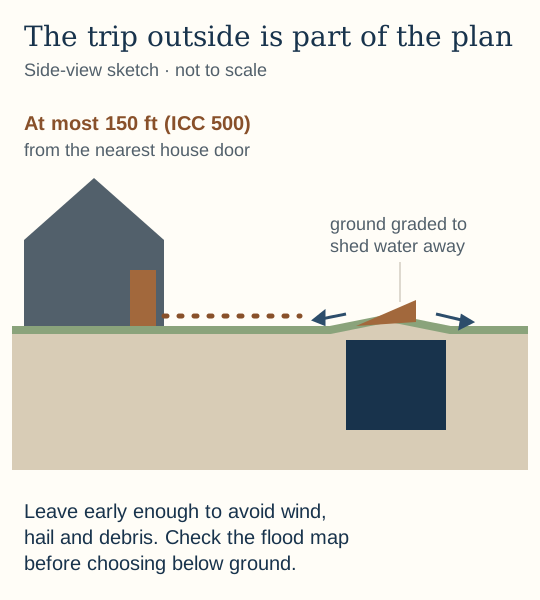
Check the flood map before you dig
No shelter is allowed in a floodway. In a mapped Special Flood Hazard Area, ICC 500 does not allow a shelter below ground. Outside mapped areas, a flood map may not show local flash-flood or drainage problems, so ask the local floodplain administrator too.
Clarksville flood-map and permit contacts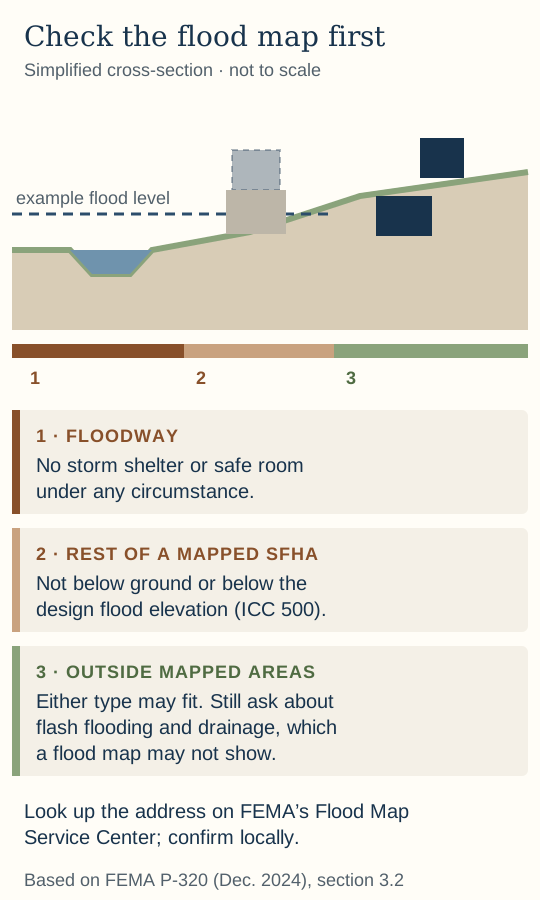
Check the site before choosing a model
Have the installer review underground utilities, groundwater, flood maps and equipment access. Ask who removes excavated soil, restores the floor or yard and explains maintenance of the hatch and any pump.
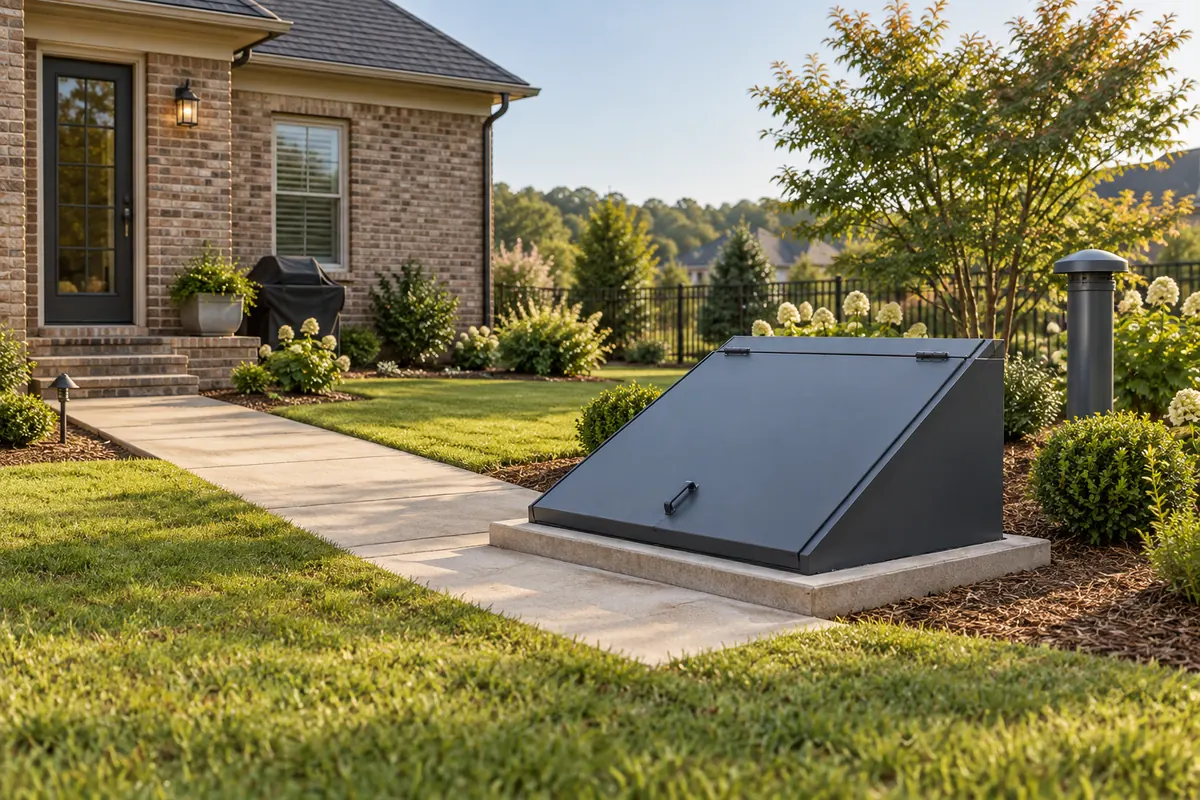
What the installation needs to cover
Flood map and drainage review
Check the address on the FEMA flood map and with the local floodplain administrator. A pump or seal is not a substitute for a suitable site.
Anchoring against groundwater
Ask how the exact unit is anchored to resist uplift from saturated soil, and who confirms it.
How compliance was shown
When FEMA published P-320 in December 2024, it knew of no in-ground or precast units listed and labeled to ICC 500. Ask for the test reports and engineering documents your permit office will accept.
Entry and usable capacity
See the stairs, handrails, hatch and seated space in person or in drawings. Check that your whole household can use them.
Excavation and utilities
Who arranges utility locating, equipment access, soil removal and unexpected rock or water?
Restoration and upkeep
Concrete repair or yard grading, the access path, cleanup, pump checks and hatch maintenance should be in writing.
Sources and further reading
Reviewed 2026-10-14
- FEMA P-320, Taking Shelter from the Storm (December 2024)
In-ground anchoring, sump pump and grading (3.5.1); 150-foot travel distance and flood siting (3.2, 3.5.2); listing status in December 2024 (4.3.2).
- FEMA Flood Map Service Center
Flood map source named in FEMA P-320.
- U.S. Department of Energy: safe rooms and storm shelters
Common questions
Can you put a storm shelter underground in a flood zone?
Not in a mapped Special Flood Hazard Area: ICC 500 does not allow a shelter below ground there, and no shelter is allowed in a floodway. Check the address on FEMA’s flood map and with the floodplain administrator.
Do underground storm shelters flood?
They can collect water. FEMA P-320 recommends grading the ground away from the entry and a sump pump inside in-ground safe rooms, and requires anchoring so groundwater cannot push the unit up.
How far can a backyard storm shelter be from the house?
ICC 500 limits the travel distance to 150 feet from the nearest house entrance to the shelter opening. Shorter is better, because FEMA advises going early to avoid wind, debris and hail.
Can you park a car over a garage-floor storm shelter?
Some models allow it. Get the exact model’s written load limits and check that everyone can reach and open the hatch with the vehicle parked.